
.png)
Newsletter N°88 - April 2026
📶Telecom: BTS Comeback Concert Demonstrated AI-Driven Telecom Operations at Scale
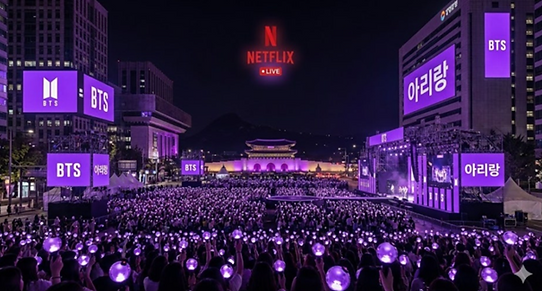
BTS comeback concert at Gwanghwamun
South Korea’s three largest telecom operators used the BTS comeback concert in Seoul as a real-world test environment for next-generation autonomous network technologies designed to manage extreme mobile traffic conditions.
The event, “BTS The Comeback Live: Arirang,” drew more than 260,000 attendees to Gwanghwamun Square and Seoul City Hall Plaza. Heavy livestreaming, video uploads, and simultaneous social media activity created an unusually demanding network environment, providing operators with a high-pressure scenario to evaluate AI-based traffic management systems.
The deployment reflected a broader transition in telecom operations from static infrastructure expansion toward adaptive, software-driven autonomous network management.

Image provided by SKT
Carrier approaches
SK Telecom
SK Telecom deployed its AI-powered A-One (Access All-in-One) platform, which:
-
Analyzed historical and real-time network conditions
-
Predicted traffic demand
-
Divided the venue into behavioral usage zones
-
Applied different configurations based on expected activity patterns
Areas near the stage were optimized for heavy content uploads, while peripheral zones were configured for livestream viewing traffic.
KT Corporation
KT focused on rapid autonomous response through its W-SDN (Wireless Software Defined Network) system.
The platform:
-
Continuously monitored network congestion
-
Detected overload risks in real time
-
Automatically redistributed traffic
-
Adjusted base station output dynamically
KT also reinforced the venue with additional mobile base stations, Wi-Fi access points, and emergency monitoring teams.
LG Uplus
LG Uplus emphasized preemptive autonomous optimization through systems capable of:
-
Setting operational parameters in advance
-
Dynamically adjusting network cells during traffic spikes
-
Redistributing loads between base stations in real time
-
Reducing localized overload risk
Broader implications
The concert demonstrated how AI-driven telecom infrastructure may become essential for future:
-
Large-scale entertainment events
-
Sports gatherings
-
Smart city operations
-
Emergency response environments
Key capabilities tested included:
-
Predictive traffic forecasting
-
Dynamic load balancing
-
Autonomous parameter optimization
-
Reduced manual intervention
The event served as a practical benchmark for whether autonomous telecom systems can maintain stable performance under unpredictable, high-density demand conditions.