
.png)
Newsletter N°81 - October 2025
📉 Economic Outlook : East Asia’s Economies Face Tariff Pressures Amid Signs of Resilience
After an unexpectedly solid second quarter for the Japanese economy, the first impacts of the newly imposed, negotiated U.S. tariffs are beginning to appear, particularly in the automotive industry. Business sentiment among manufacturers, however, remains positive, with hopes that conditions may turn out better than initially feared. The Japanese government has also maintained its cautiously optimistic basic assessment of the economy.
In South Korea, exports exceeded expectations even as U.S. tariffs began to take effect and reduced shipments to the American market. Semiconductor exports, which account for roughly one-fifth of Korea’s total export value, reached record highs, fueled by the global boom in artificial intelligence.
In China, much attention is focused on the economic boost expected from the upcoming National Day holidays starting October 1.
Provinces are competing creatively to attract consumer spending, while neighboring countries prepare for a massive influx of mainland travelers. Around 300 million daily trips are anticipated during the eight-day break. This expected surge in domestic consumption could offer a glimmer of hope as key indicators continue to reflect weak demand amid ongoing U.S.-China tensions.

🏗️ Construction: Kimoto Launches SPLAT TWIN, Next-Generation 3D Data Creation Service
Kimoto has announced SPLAT TWIN, a breakthrough service for large-scale, lightweight, and highly realistic 3D spatial data creation, ushering in a new standard for both the construction and infrastructure sectors. Built around “Gaussian Splatting”—a cutting-edge technology—SPLAT TWIN sidesteps the heavy files and processing difficulty of point clouds, and overcomes the lack of fine details typical of polygon meshes.
How SPLAT TWIN Works?
Unlike past 3D methods, SPLAT TWIN represents each data point as an ellipsoid whose color fades according to a Gaussian distribution. This approach delivers models that are light and easy to process, yet almost photographic in realism. Fine details are captured, from leaves and glass to metal reflections and the shimmer of water—features often missing from traditional models.
3D spatial data of the factory created with ‘SPLAT TWIN’. The result is as sharp as a photograph.


Broad Applications and Compatibility
SPLAT TWIN is engineered for a wide range of demanding environments—industrial buildings, factories, bridges, extensive construction projects, and natural landscapes like mountains and coasts. Data acquisition is highly versatile: users can build 3D models with DSLR and 360-degree cameras, smartphones, and drones, rather than relying on expensive specialized sensors. This greatly lowers entry barriers for digital twin creation and site visualization.
Example of a 3D modeling of a bridge.
Key Features and Benefits
High-precision visualization of textures and details, including subtle reflections and environmental phenomena.
Lightweight file sizes enable smooth viewing, sharing, and manipulation, even for large sites.
Supports measurement, annotation, and media embedding within 3D environments for richer project documentation.
Reduction in on-site survey workload and efficient remote verification of project sites, saving time and reducing costs.
Transforming Industry Practices
With SPLAT TWIN, Kimoto delivers a tool that transforms how professionals visualize, communicate, and manage construction and infrastructure environments, making digital twins more accessible and effective for real-world applications.

⚙️Chipset: Chinese Tech Giants Turn to Domestic Chips for AI Training Amid US Restrictions
Chinese technology companies Alibaba and Baidu are increasingly adopting domestically developed processors to train their artificial intelligence models, signaling a gradual reduction in reliance on US chipmaker Nvidia. Alibaba’s Zhenwu PPU is reported to offer performance comparable to Nvidia’s China-specific H20 GPU, while Baidu employs its Kunlun chip to support training of the Ernie AI model.
The move is driven largely by US export restrictions, which limit China’s access to advanced Western semiconductors. While neither company has fully abandoned Nvidia chips—particularly for their most complex and demanding AI models—the trend reflects a broader push toward technological self-reliance. Analysts note that this shift could influence the regional market for high-performance AI chips and reshape supplier dynamics.
This development illustrates a rapidly evolving AI chip ecosystem in China, where domestic innovation is accelerating in response to geopolitical pressures. The adoption of in-house processors also underscores China’s strategic emphasis on reducing dependency on foreign technology, especially in critical sectors such as AI and data processing.
In parallel, Nvidia is reportedly exploring the development of new chips specifically for the Chinese market, although such plans require approval from the US government due to export regulations. The company’s potential adjustments indicate the complexity of balancing commercial opportunities with compliance to international trade restrictions.
Experts suggest that the trend may lead to increased competition between domestic and foreign chipmakers, driving further innovation in AI hardware. It also highlights the broader challenge for global technology companies operating in China, as local alternatives become more viable and geopolitical considerations increasingly influence procurement decisions.

⚡Energy: South Korea plans two new large nuclear reactors, more renewables in energy mix
South Korea has unveiled an ambitious new energy strategy that aims to significantly reshape its national electricity mix by 2038. The recently finalized plan calls for the construction of two large-scale nuclear reactors and a small modular reactor (SMR), the largest increase in nuclear capacity since 2015. Simultaneously, the government intends to dramatically scale up renewable energy, particularly solar, reflecting Korea’s dual priorities of decarbonization and energy security.
Key Elements of the New Energy Plan
South Korea’s 11th Basic Plan for Long-Term Electricity Supply and Demand—covering the period from 2024 to 2038—targets a multi-pronged energy expansion. Nuclear power’s share is expected to grow from approximately 30.7% to 35.2% of the national mix. This comes alongside a planned rise in renewable energy, which should expand from 9.6% to around 29.2%. Fossil fuels will see a significant decline: coal is projected to drop from over 31% to just 10.1%, and gas will fall to 10.6% by 2038. The overall contribution of carbon-neutral sources (nuclear and renewables combined) is anticipated to surpass 70% by 2038.
Nuclear Power: Expansion and Technology
The plan includes two new large-scale reactors and one SMR, with sites for the new plants to be selected starting March 2025. These plants are planned to begin operations in the mid-2030s, though final commissioning could extend to 2039. Korea Hydro & Nuclear Power (KHNP) continues work on four additional reactors already under construction as part of its broader nuclear expansion.
While the previous administration under Moon Jae-in pursued a phase-out of nuclear energy after the Fukushima accident, recent policy reversals now position nuclear as a cornerstone of Korea’s path to a carbon-neutral grid. The plan supports further R&D for domestic SMR technology, with approval and commercialization targeted for 2035.
Renewables and Grid Modernization
To offset the originally planned but canceled third reactor, the plan boosts the solar energy build-out by 2.4 GW, targeting a total of 77.2 GW from solar by 2038. This expansion will demand major upgrades to energy storage and grid infrastructure, as Korea’s transmission network remains a weak link in the transition toward high levels of intermittent renewable energy. Energy storage system (ESS) capacity is set to jump to 138 GWh, with renewables’ share in the power mix expected to reach nearly 33% by 2038.
Economic and Industrial Impact
The energy sector’s transformation will be critical as electricity demand grows rapidly, fueled by the expansion of Korea’s semiconductor and artificial intelligence industries. The plan is broadly supported by the nation’s energy industry, but experts have raised concerns about the feasibility of adding 50 GW of solar capacity within 14 years and the associated costs. Modernizing and expanding the transmission and distribution grid is viewed as a key challenge that must be addressed to ensure system reliability.
Policy and Political Dynamics
Finalization of the plan followed months of political debate, with strong opposition to new nuclear builds. A compromise reduced the number of new large reactors and increased solar targets. With leadership changes and shifting party strategies, ongoing debates may still affect the implementation of aspects of the plan.
South Korea’s new energy roadmap marks a strategic pivot to carbon-neutral electricity, balancing nuclear expansion and aggressive renewables targets. Its success will depend on technology deployment, grid modernization, and political continuity, all in the context of strong industrial growth and a national commitment to sustainability.

🧠 Generative AI: SK Telecom joins hands with OpenAI in consumer AI push
SK Telecom Becomes OpenAI's Exclusive B2C Partner in Korea
SK Telecom has secured an exclusive B2C partnership with OpenAI, becoming the only Korean telecom carrier to collaborate directly with the ChatGPT creator following the establishment of OpenAI's Korean office on September 10, 2025. This landmark partnership positions SKT at the forefront of Korea's AI transformation as OpenAI recognizes the nation as an "AI full-stack country" with robust infrastructure, government support, and high technology adoption rates.
ChatGPT Plus Promotion Launches Korean AI Integration
The partnership's first consumer initiative is a ChatGPT Plus "1+2 months" promotion running from September 19 through February 2026. SKT customers can access 3 free months of ChatGPT Plus when subscribing for one month through the T Universe platform. This premium service offers faster response times, advanced voice mode, video generation capabilities, and OpenAI's new "Deep Research" tool that synthesizes complex online information for personalized reports on topics ranging from commuter bicycles to market analysis.
Foundation Built on Trust and Collaboration
OpenAI's selection of SKT as its exclusive Korean telecom partner stems from years of collaborative trust-building. The companies have worked together since 2023 through:
-
Global AI Hackathon co-hosting for AI talent development
-
MIT GenAI Impact Consortium founding membership for manufacturing AI research
-
Strategic alignment with SKT's "self-strengthening and cooperation" strategy alongside partnerships with AWS, Anthropic, and Perplexity
Lee Jae-shin, head of SKT's AI Growth Strategy Division, emphasized: "We will reinforce both international collaboration and self-competitiveness to build a customer-centric AI ecosystem”. Andy Brown, OpenAI's Asia-Pacific business lead, added: "Through this joint marketing with SKT, we hope more people can easily access ChatGPT and experience AI's value in their daily lives".
Strategic Context: Korea's AI Market Dominance
Korea represents a critical strategic market for OpenAI. The country boasts the world's second-highest ChatGPT paid subscriber base after the United States, with over 5 million monthly active users and ranks in the top 5 globally for enterprise customers. Korean developers using OpenAI's API platform also place within the global top 10.
OpenAI Korea, established in Seoul's Gangnam Teheran-ro district, serves as the company's 12th global office and third Asian headquarters after Singapore and Japan. The office will initially staff approximately 10 employees with plans for expansion as partnerships deepen.
Expanding AI Ecosystem Integration
Beyond the immediate promotion, SKT and OpenAI plan to expand cooperation across B2B services and SK Group-wide initiatives. This aligns with SKT's comprehensive AI infrastructure investments, including:
-
Hain GPUaaS cluster for AI computing power
-
SK AI Data Center Ulsan - Korea's largest AI-dedicated facility outside Seoul
-
Leadership role in the K-AI Alliance promoting domestic AI development
The partnership also complements OpenAI's broader Korean strategy, including research collaboration with Seoul National University, partnerships with major conglomerates across electronics, construction, finance, and e-commerce sectors, and potential data center construction in South Korea.
This partnership represents a strategic convergence of OpenAI's global expansion ambitions with Korea's emergence as an AI powerhouse, positioning SKT customers at the forefront of next-generation AI service adoption while strengthening Korea's role in the global AI ecosystem.
Poster for Prompt-er Day Seoul 2023 Generative AI hackathon co-hosted by SK Telecom and OpenAI

🏙️ Smart Cities: Korea’s Smart City Projects: Hyundai E&C and Yongsan IBD
Hyundai E&C’s “Robot-Friendly” Housing Complex
Hyundai Engineering & Construction (E&C) has unveiled Korea’s first robot-friendly residential district in Apgujeong, Seoul, presenting a new model for future housing where people and robots coexist.
From the design stage, the complex has been optimized for robotic operations, with elevators, automatic doors, and communication networks fully integrated so that service robots can freely navigate the entire site. This allows autonomous deliveries, mobility assistance, and even fire safety operations without human intervention.
Key features include:
-
Unmanned shuttles powered by Hyundai Motor Group’s “Shucle” platform for on-demand mobility.
-
Personal mobility robots that transport groceries or assist residents with reduced mobility.
-
Unmanned fire-fighting robots (Hyundai Rotem) capable of operating in hazardous conditions.
-
EV charging robots that automatically connect and disconnect charging cables.
-
Automated valet parking robots (Hyundai WIA) that optimize parking space in tight areas.
Example of UAM Wind Path Simulation in Yongsan IBD

Woven City - Mount Fuji

Robots to Be Introduec in Apgujeong
Hyundai E&C has already commercialized a door-to-door autonomous delivery robot service at its DH Daechi Edelweiss complex, developed in collaboration with startup Movin.
This system enables parcels and food to be delivered seamlessly from the main gate to each resident’s front door.According to Hyundai, this is the beginning of a new urban paradigm where robotics and AI become everyday companions, supporting mobility, convenience, and safety in residential life.
Yongsan International Business District: Seoul’s Smart Core
Meanwhile, the Seoul Metropolitan Government is investing ₩84.1 billion (approx. $61 million USD) to transform the Yongsan International Business District (IBD) into a world-class smart city hub.
Covering 456,000 square meters around Yongsan Station, the project will implement:
-
A centralized operations center managing real-time data on energy, traffic, safety, and the environment.
-
Digital twin technology to simulate and optimize wind flows, sunlight exposure, and traffic circulation.Smart underground infrastructure, consolidating utilities (water, power, heat, telecom, logistics) with IoT sensors for efficient maintenance.
-
Smart mobility and logistics services, including autonomous vehicles and advanced freight handling systems.
-
Robot-friendly, energy-efficient buildings with intelligent façades and seamless integration into the wider city system.
The project, scheduled to begin in 2026, aims to position Yongsan as the “Seoul Smart Core”, a global testbed for next-generation city solutions. A Unified Vision for the FutureTogether, Hyundai E&C’s robot-friendly housing and the Yongsan Smart Core initiative illustrate Korea’s dual approach to smart cities: human-centered residential innovation paired with citywide digital transformation. By integrating robotics, AI, and green infrastructure, Korea is not only reimagining daily life but also setting a global benchmark for sustainable, intelligent urban development.
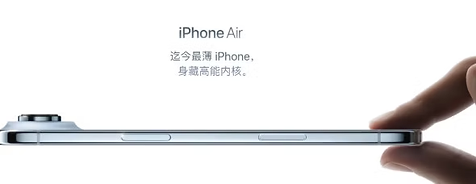
📡Telecom: Three major Chinese mobile operators adopt eSIM for iPhone Air, signaling the possible end of physical SIM cards
China's telecom landscape is experiencing a seismic shift as the country's three major mobile operators, China Mobile, China Unicom, and China Telecom, rush to implement eSIM support following Apple's announcement of the eSIM-only iPhone Air. This marks the first time since 2022 that Chinese carriers have actively pursued smartphone eSIM services, potentially signaling the beginning of the end for physical SIM cards in the world's largest mobile market.
China Unicom Takes the Lead
China Unicom has emerged as the frontrunner, already listed as the exclusive eSIM carrier for iPhone Air on Apple's Chinese website. The company quietly launched an "eSIM Service Activation" page in July 2025 and now supports eSIM activation in 25 provinces and cities. Users must visit China Unicom retail stores with valid ID for identity verification and device activation, complying with China's strict user identification requirements.
China Telecom and China Mobile Rush to Catch Up
China Telecom has confirmed its eSIM mobile services are "fully prepared" and expects to launch after receiving Ministry of Industry and Information Technology (MIIT) commercial trial approval. The carrier has already begun accepting eSIM applications in four provinces: Guangdong, Sichuan, Anhui, and Jiangxi.
China Mobile, the world's largest mobile operator which has over 1 billion mobile subscribers (1.005 billion as of Q2 2025), has also submitted eSIM applications and established reservation portals in its mobile app, stating that service availability will be announced separately after regulatory approval.
Regulatory Hurdles and Security Concerns
China's cautious approach to eSIM stems from security and regulatory concerns. The technology was suspended in 2022 due to worries about "over-the-air card writing" fraud risks and difficulties in linking user IDs to devices, a requirement under Chinese law. Only iPhone Air model A3518 sold in mainland China will support local eSIM profiles, with international models unable to activate Chinese carrier eSIMs.
Market Implications and Future Outlook
The eSIM rollout represents a fundamental shift in China's telecommunications ecosystem. According to GSMA projections, global eSIM smartphone connections will reach 1 billion by end-2025 and 6.9 billion by 2030, representing three-quarters of all smartphone connections. However, adoption faces challenges as 73% of elderly users still prefer physical SIM cards.
ABI Research identifies China as the world's largest potential eSIM consumer market by 2030, with Apple expected to dominate initial deployments while facing competition from domestic brands like HONOR, OPPO, Xiaomi, and vivo. The transition could intensify operator competition as switching carriers becomes as simple as changing WiFi networks.
The iPhone Air's launch has accelerated China's digital transformation timeline by forcing rapid regulatory adaptation. While challenges remain around security protocols and user acceptance, the coordinated effort by all three major operators suggests China is committed to joining the global shift toward embedded SIM technology, potentially making 2026 the year physical SIM cards begin their decline in the world's second-largest economy.
Advertising for eSIM iPhone Air in mainland China.
🎬 Media & Content: Vigloo Launches Korea’s First Fully AI-Produced Short Dramas
By applying AI across the full production cycle, Vigloo is redefining short-form content creation. Its upcoming dramas “My Savior from Hell” and “Seoul: 2053” set for release on October 2, 2025, showcase how the company has reduced production costs by over 90% while halving turnaround time.

Key visuals from Vigloo
AI at the Core of Storytelling
My Savior from Hell, a romance centered on a contract relationship with a chaebol heir, was produced entirely in-house by Vigloo’s creative team. Using an image-to-video pipeline, designers generated character visuals aligned with personas, then transformed them into vertical 9:16 format videos tailored for mobile viewing. This approach enabled consistent character appearances while cutting visual effects and location shooting costs by over 90% and reducing the production timeline by half.
The script was developed in collaboration with a writer trained through the Vigloo Writer’s Room, the company’s own talent incubation program. This highlights how AI-driven workflows can be combined with emerging creative voices to maintain narrative depth.
Expanding Genres with Collaboration
The dystopian sci-fi Seoul: 2053 was co-produced with local studio Johnny Bros. Here, AI was applied to generate complex visual sequences such as sandstorms, futuristic cityscapes, and humanoid figures—elements traditionally requiring high-budget CGI or impractical live-action shoots. The result demonstrates how AI can expand creative boundaries while keeping production efficient and cost-effective.

Key visuals from Vigloo
Building a New Production Model
Looking forward, Vigloo plans to scale its AI production techniques across the industry. The company will operate with a dual structure—an internal production team and external collaboration units—to broaden partnerships with studios. AI-assisted post-production is expected to streamline expensive scenes such as drone shots, military battle sequences, and luxury car chases, giving creators more freedom to experiment without budget constraints.
CEO Choi Hyuk-jae described the initiative as “a starting point for establishing AI-driven methods as the new standard in short-form content.” He emphasized that AI should serve as a tool that strengthens competitiveness for both creators and platforms, enabling greater freedom in experimentation while lowering barriers to entry.

“‘My Savior from Hell’ – AI image generation using mannequins (top) and AI character appearance consistency test (bottom)